
Mark Thomson didn’t come to Witton Barracks looking for a typical office for his architectural practice, Eco Effective Solutions. He came looking for community. “One of the big attractions for me in being down here,” he says, “is because I really feel strongly about community development.” As somebody who has been in commercial practice for coming up to 40 years now, Mark knows how easy it is to “lock yourself away in an office and just do business activities.” Witton Barracks offers something different: “I really like the idea of actually putting yourself in a community space and just seeing what is potentially possible.”
A socially‑focused practice
Eco Effective Solutions is the third part of Mark’s career. After 26 years in a mainstream commercial architectural firm in Brisbane, where he rose from junior to partner, he moved into a role leading environmental practices for a major building company. When the GFC hit and that role disappeared, he decided it was time to build something different.
“The purpose of Eco Effective Solutions,” he explains, “was to explore having a more socially-focused practice, as opposed to a commercially-focused practice.” He deliberately set himself a rule when he started: to dedicate at least one day a week to non‑commercial activities, just to see what might be possible.
Mentoring students at Witton Barracks
That commitment now shapes the way Mark uses his studio at Witton Barracks. He currently volunteers as a director on two not‑for‑profit boards, and has tutored and lectured at UQ and QUT over many years. But, he says, “the thing that I’m primarily involved in here at Witton Barracks is mentoring students.” Through QUT’s work and learning program, he offers students 100 hours of support, helping them transition from university into the workplace.
Mark observed that many students miss out on the kind of mentorship he benefited from early in his career. “I had people in the office that were quite instrumental to my development as an architect. And mentoring was not just teaching you architectural skills, but it was also a bit of life skills as well. I don’t feel that we have that working environment anymore.” For Mark, Witton Barracks is a way to recreate some of that culture in a new setting. “I found a little niche whereby I can share my skills I’ve developed over years to people who are just coming into the industry. And it seems to be working, because most of the students that I mentor don’t always get a job immediately, but they go on to get into the industry.”
Community and environmental architecture
Since designing the first solar electric house in Australia, Mark has watched the field evolve. The key thing to remember, he emphasises, to clearly articulate environmental goals at the outset of a project, rather than bolting them on later. “Thirty years ago, as an environmental architect, I would just have to put solar on the roof and a water tank in and everybody would go, oh, that’s environmental,” he reflects. “But now this whole community issue is the really important thing” — thinking not just about the site itself, but about how you build with your neighbourhood in mind, knowing that every project has an impact even in a culture that often encourages people to “just mind our own business and just do our own thing.”
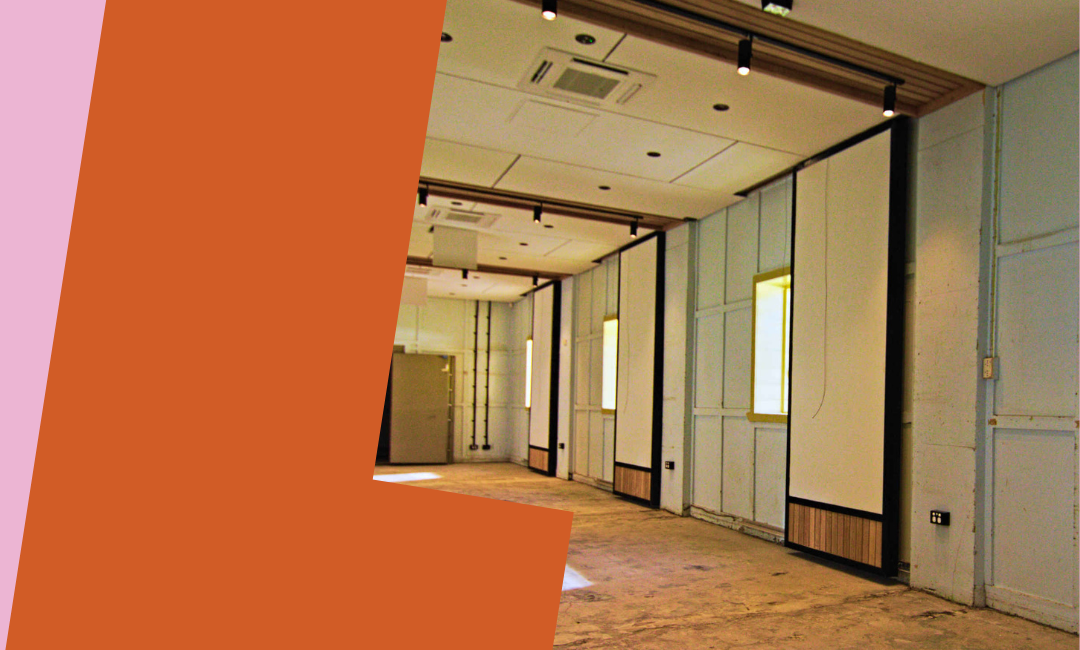
The solid masonry structure of the old cell blocks at Witton appealed to Mark. “What really attracted me about Witton Barracks was the thermal mass that these cells provide, because you don’t need to have air conditioning here,” he explains. He can also walk from his home to his office, keeping his environmental footprint low and reinforcing his sense that work and community are part of the same local ecosystem.
Watching a hub come to life
Mark said he enjoys watching how Witton Barracks evolves as it gradually fills with social enterprises, small businesses, and events. “It’s interesting observing how this place is changing, how a bit more activity here is pulling people in. I’m really interested to see what its potential might be, and to participate in it.”